LinkedIn Post
My doctor says I'm too fat.
by Chris Hornby
5 May 2026
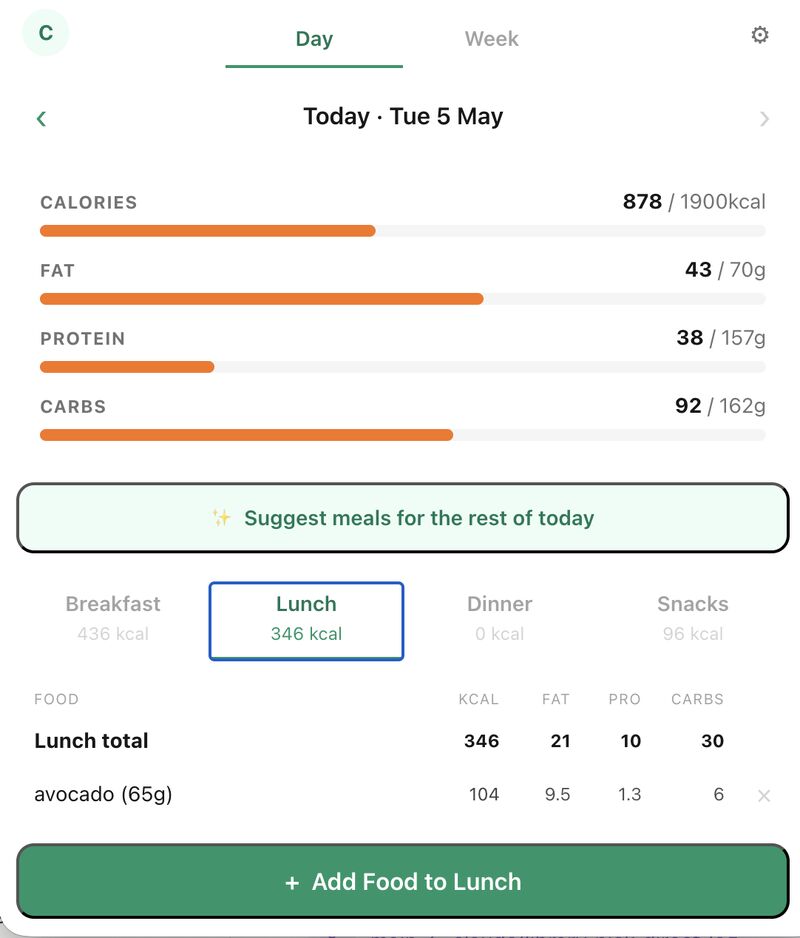
Fair enough. So I needed a calorie counter. I tried a few. None of them did quite what I wanted, and I'd been looking for an excuse to push Claude Code on something deceptively simple. So I spent a weekend on it.
Multi-user, mobile, full stack. Sign up and you're in. What it does:
- Type or dictate your meal. The AI works out the food and macros from its training data, with a Google search fallback for anything unusual. Very accurate in testing.
- Point the camera at a nutrition label. It reads it and logs it as a food, which then autosuggests next time you type.
- Point the camera at a plate of food. The AI works out what's on it, estimates the portions, extracts the macros and logs it for you. Less accurate, but pretty cool.
- It spots meals and snacks you eat often and turns them into one-tap buttons.
- At any time, click meal planner and the AI gives you exact foods and portions to hit your targets for the rest of the day. This one is genuinely very cool.
- Weekly view, with the AI telling you what to focus on (eat fewer crisps, eat more protein).
This is the pattern Carlota Perez and Kevin Kelly describe. Small capabilities quietly get good enough, and one day what used to be a project is a weekend. We're there. The world is still catching up.
For the curious, the tech stack:
- React + Vite + Tailwind, deployed to Netlify
- Supabase Postgres for storage, Supabase Edge Functions (Deno) for the AI calls
- Anthropic Claude Haiku 4.5 for food parsing, Sonnet 4.6 for vision and weekly insights
- Web Speech API for voice, lucide-react for icons
- Built end-to-end with Claude Code