Newsletter | July 2026
From Caversham House this month: 3 strategic insights on the trends reshaping how organisations think about AI, 3 tools we've been testing at the frontline and 3 training courses to help your teams build real capability.
1. The Month in View: 3 Strategic Trends
Curated insights to help you read the room and lead the shift.
Trend 1: Saving hours is not converting into higher profits
AI is saving people time, but that time isn't turning into measurable value.
- Saved hours are rarely redirected. Around 42% of workers save roughly eight hours a week, but two-thirds of them get no guidance on reinvesting that time.
- Efficiency gains don't change what a company actually sells.
- Companies that confine AI to productivity barely move on valuation, while those embedding it in products and new business lines do.
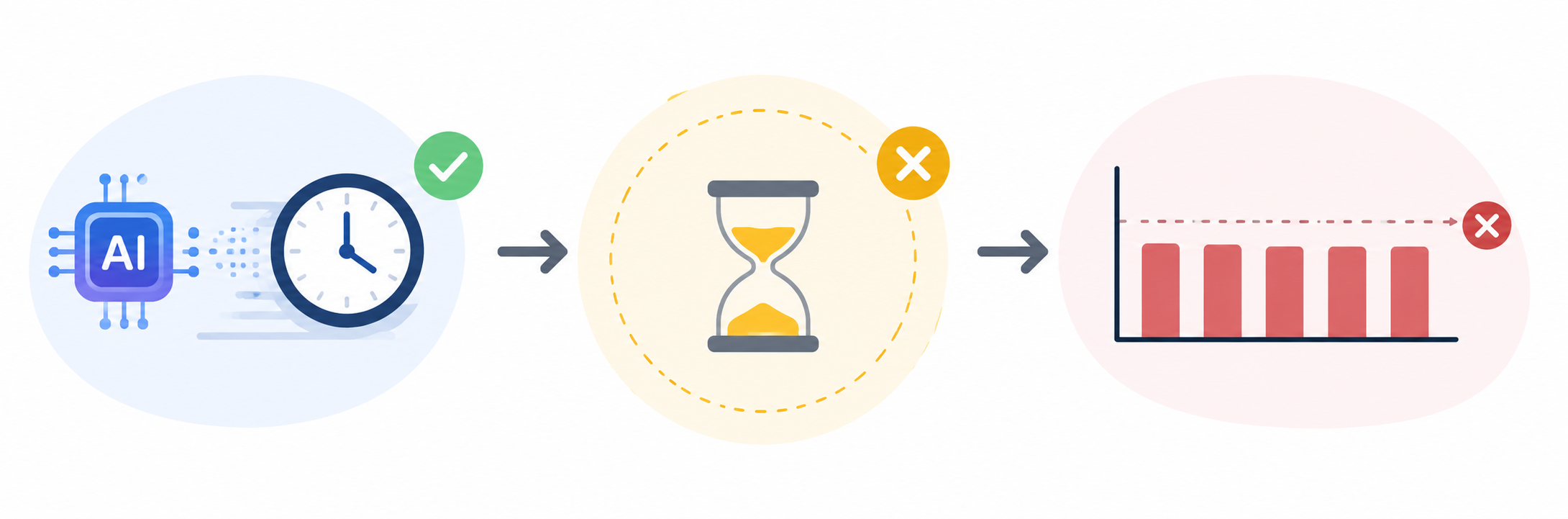
Call to action: Saved time is not saved money unless you redirect the hours and move the needle on what you actually sell. Without that, the investment shows up as activity, not return.
- Track where saved time actually goes, and redirect it to higher-value work on purpose
- Measure AI programmes by output and revenue change, not licences issued or courses completed
- Identify where AI could change your product or open a new revenue line
Relevant courses:
AI Steering Committee and Governance
Read more:
Beyond productivity: how AI creates value in private equity | From AI upskilling to AI performance: five questions every CEO should ask | AI productivity gains are real but so is bad management
Trend 2: Your AI Problem Is a People Problem
The technology is rarely the blocker any more. What separates AI programmes that deliver from those that stall is whether people actually change how they work, and that is a question of sponsorship, enablement and trust, not model quality. Two case studies stand out as models for effective adoption:
- AT&T set a three-month pause on its AI rollout before looking at ROI, measured actual time saved through employee surveys cross-checked against usage data, then applied its own cost models. It turned real behaviour change into a conservative, credible ROI figure that won budget for 40 000 more licences.
- KPN built adoption around its agentic customer-care goals, involving frontline staff in design and testing and tracking success against defined operational metrics tied to real customer-care outcomes, not just usage or licence counts.
Call to action: The organisations getting a return are the ones investing in sponsorship, enablement and the slower work of changing how people work.
- Secure visible executive sponsorship and a clear "what's in it for me" before provisioning licences
- Rebalance spend toward enablement, people, training and change, not just technology
- Involve frontline staff in design and testing, and track adoption depth, not licence counts
Relevant course:
Read more:
How AT&T turned Copilot into measurable business impact | How KPN is building an agentic AI engine for customer care | Five ways to create sustainable AI-driven growth
Trend 3: Stop Bolting AI On - Build It Into the Work
Most organisations have added AI around the edges of work, while the actual processes stay untouched. The result is a productivity tax: people spend up to 20% of their time moving data between disconnected tools.
- AI in HR remains mostly disconnected pilots rather than embedded workflow redesign, and only 11% of firms (McKinsey's HR Monitor 2026) take a future-oriented approach to workforce planning, a sign of tools added without rethinking the process around them.
- Blackstone's legal and compliance team mapped end-to-end workflows and clarified where human judgment stays non-negotiable before embedding AI as a first-pass reviewer. This allows human reviewers to be 30% more productive.
Call to action: The return comes from embedding AI in core systems and redesigning the work around it, not from another standalone pilot.
- Map your end-to-end workflows before buying another tool.
- Decide where judgment must stay human.
- Audit where staff manually move data between tools.
- Step back and apply AI to the entire value chain.
Relevant course:
Leading Teams in New AI Workflow Design
Read more:
The copy-paste economy: how task-based AI is failing the enterprise | Blackstone's legal and compliance AI transformation started with technology | HR Monitor
2. Tools
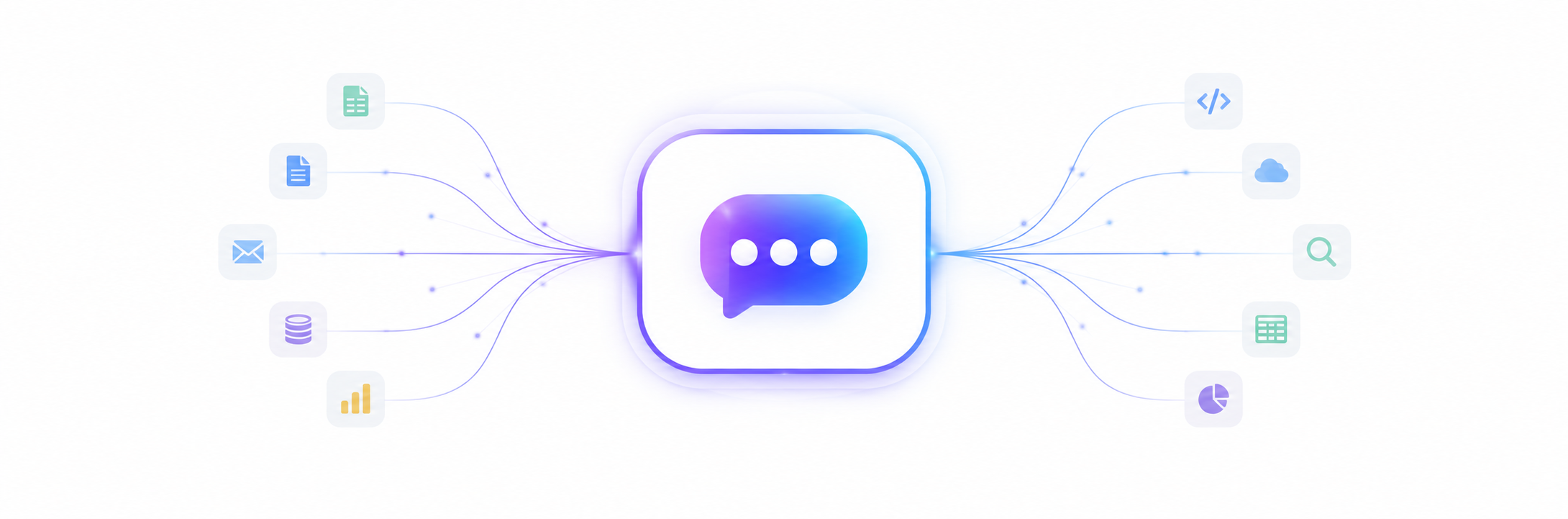
There's a strong shared thread across our AI usage this month, where AI is becoming the interface, while the underlying tools recede into the background.
Using built-in AI tools
The AI tools built into our e-learning design platform have become a really useful addition to our workflow. They're not perfect, and some features are definitely more reliable than others, but through trial and error, we've learned where they add real value.
Value: Rather than starting from scratch every time, the AI gives us a solid layout that we can refine and improve. The biggest ROI is that it frees us up to focus on instructional design, learner experience and quality assurance.
Reminder: The best way to get value from AI is to understand its strengths and weaknesses in your own workflow. Keep a record of what works, what doesn't, and revisit it after each update. AI tools are improving so quickly that features you ruled out a few months ago may now be among the most useful.
Coding without opening an IDE
We're still building software, but increasingly through conversation rather than inside a traditional coding environment. We describe the change, review whether the result works, and ask the agent to adjust it.
Reminder: The code still matters, but it is becoming less visible. The more important skill is defining what the software should do and what a correct outcome looks like.
Using software without opening the software
The same shift is happening across email, calendars, ticketing systems and other SaaS tools. We still use them, but increasingly through an AI layer rather than through each product's own interface.
Value: Instead of moving between apps, copying information and updating records manually, we describe the outcome we need and let the AI work across the tools underneath.
3. Training Update: Learning Spotlight
Highlighting our newest and updated course builds
All Staff
Working Smarter with Microsoft Copilot: An AI Foundations Course
This is our foundations course but built for businesses using Microsoft Copilot, and is suitable for all employees regardless of their current experience with AI tools, whether they have never used Copilot before or are already using it daily.
All Staff
Data, Privacy and AI: Practical Decisions Every Day
Help employees make confident, responsible decisions about data when working with AI tools, and understand the real risks of using unapproved ones.
Team Leaders
Updated with latest research
Leading Teams Through New AI Workflows
Help leaders guide teams as work processes change with AI: clarifying roles, setting expectations and supporting people through the uncertainty that comes with genuine change.
Ready to take the next step?
- Already a subscriber? These modules are live in your training portal now.
- Thinking about subscribing? Take a look at our 2026 Training Subscriptions to see what's included and how it works for your team.
- Want to talk strategy? Book a briefing or contact us and we can work through your 2026 AI priorities together.